
How to Reset Your Life When Everything Feels Messy
Feeling stuck or overwhelmed? Learn how to reset your life in 90 days with practical steps to improve your health, build better habits, regain focus, set meaningful goals, and create a lifestyle that moves you forward.

On this page
- 1. Stop Trying to Fix Everything at Once
- 2. Take an Honest Look at Your Current Life
- 3. Decide What You Actually Want to Improve
- 4. Turn Your Goals Into Small, Manageable Actions
- 5. Build a Routine That Fits Your Real Life
- 6. Give Yourself Enough Time to Change
- 7. Track Your Progress and Review Your Actions
- 8. Start With the Next Action, Not the Perfect Plan
- Make Your Next 90 Days Count
Feeling stuck, overwhelmed, or unhappy with how your life is going? You don't need to fix everything overnight. You need a clear starting point and a simple way to move forward.
Sometimes life doesn't fall apart all at once.
Your sleep schedule gets worse. You stop exercising. Important tasks keep getting postponed. You spend more time scrolling than doing things that actually matter. Your goals slowly become distant ideas rather than things you're working towards.
Nothing necessarily feels like a major disaster, but something doesn't feel right either.
You know you could be doing better, yet you don't know where to begin.
This is when a life reset can help.
A life reset isn't about abandoning your current life and becoming a completely different person. It's about stepping back, understanding what's going wrong, deciding what matters, and gradually rebuilding the parts of your life that need attention.
Here's how to start.
1. Stop Trying to Fix Everything at Once

One of the biggest mistakes people make when trying to improve their lives is attempting to change everything simultaneously.
You decide to wake up at 5 AM, start working out, eat healthier, read books, learn new skills, stop using social media, and become more productive.
For the first few days, everything feels exciting.
Then reality catches up.
Your schedule becomes difficult to maintain, motivation fades, and eventually you return to your old routine.
The problem isn't necessarily that you lack discipline. You may simply be trying to manage too many changes at once.
Start by identifying what actually needs improvement.
You don't need ten new habits tomorrow. You need to understand which areas of your life deserve your attention first.
2. Take an Honest Look at Your Current Life

Before deciding where you want to go, understand where you currently stand.
Take some time to examine these five areas:
Health: Are you sleeping enough? Do you feel energetic? Are you taking care of your body?
Fitness: Are you physically active? Are you building strength and maintaining a healthy body?
Mind: Are you constantly distracted? Do you spend too much time consuming information without applying it?
Relationships: Are you maintaining meaningful connections? Are you giving enough attention to the people who matter?
Purpose and personal growth: Are you learning, improving, and working towards something meaningful?
You don't need to judge yourself. Just be honest.
Write down what's working, what's not working, and what you've been neglecting.
Sometimes the first step towards change is simply admitting what needs to change.
3. Decide What You Actually Want to Improve

Now that you understand your current situation, choose what deserves your attention.
Don't create an unrealistic picture of your perfect life.
Think about what would make your everyday life genuinely better.
Maybe you want to:
- Improve your physical health.
- Build a consistent exercise routine.
- Fix your sleeping schedule.
- Reduce unnecessary screen time.
- Develop a valuable skill.
- Become more focused at work.
- Spend more quality time with family.
- Work towards a meaningful personal goal.
Choose a few priorities that matter most right now.
Remember, the objective isn't to become perfect in 90 days. It's to become noticeably better than where you started.
4. Turn Your Goals Into Small, Manageable Actions

Having a goal feels good. Knowing exactly what to do next is what makes progress possible.
Consider this example:
Goal: Improve physical fitness.
That's a good intention, but it doesn't tell you what to do today.
Break it into manageable actions:
- Walk for 20 minutes.
- Exercise three times a week.
- Prepare healthier meals.
- Maintain a consistent sleep schedule.
Now you have something you can actually follow.
Apply the same approach to other areas of your life.
Instead of saying, "I want to become more productive," decide when you'll work on your most important task.
Instead of saying, "I want to learn something new," decide what you'll study and how much time you'll give it.
Make your next action so clear that you don't have to spend time wondering what to do.
5. Build a Routine That Fits Your Real Life
A good routine shouldn't exist only on paper.
It should work with your responsibilities, available time, energy, and circumstances.
You don't need to copy someone else's 5 AM routine or follow an influencer's entire lifestyle.
Start with a few realistic commitments.
For example:
- Maintain a reasonably consistent sleep and wake-up time.
- Include some physical activity.
- Give focused time to important work.
- Make room for learning and personal development.
- Spend time away from screens.
- Review your progress regularly.
Keep your routine flexible enough to survive real life.
Missing one day doesn't mean you've failed. Resume with the next planned action instead of abandoning everything.
Consistency isn't about having a perfect streak. It's about continuing even when things don't go perfectly.
6. Give Yourself Enough Time to Change
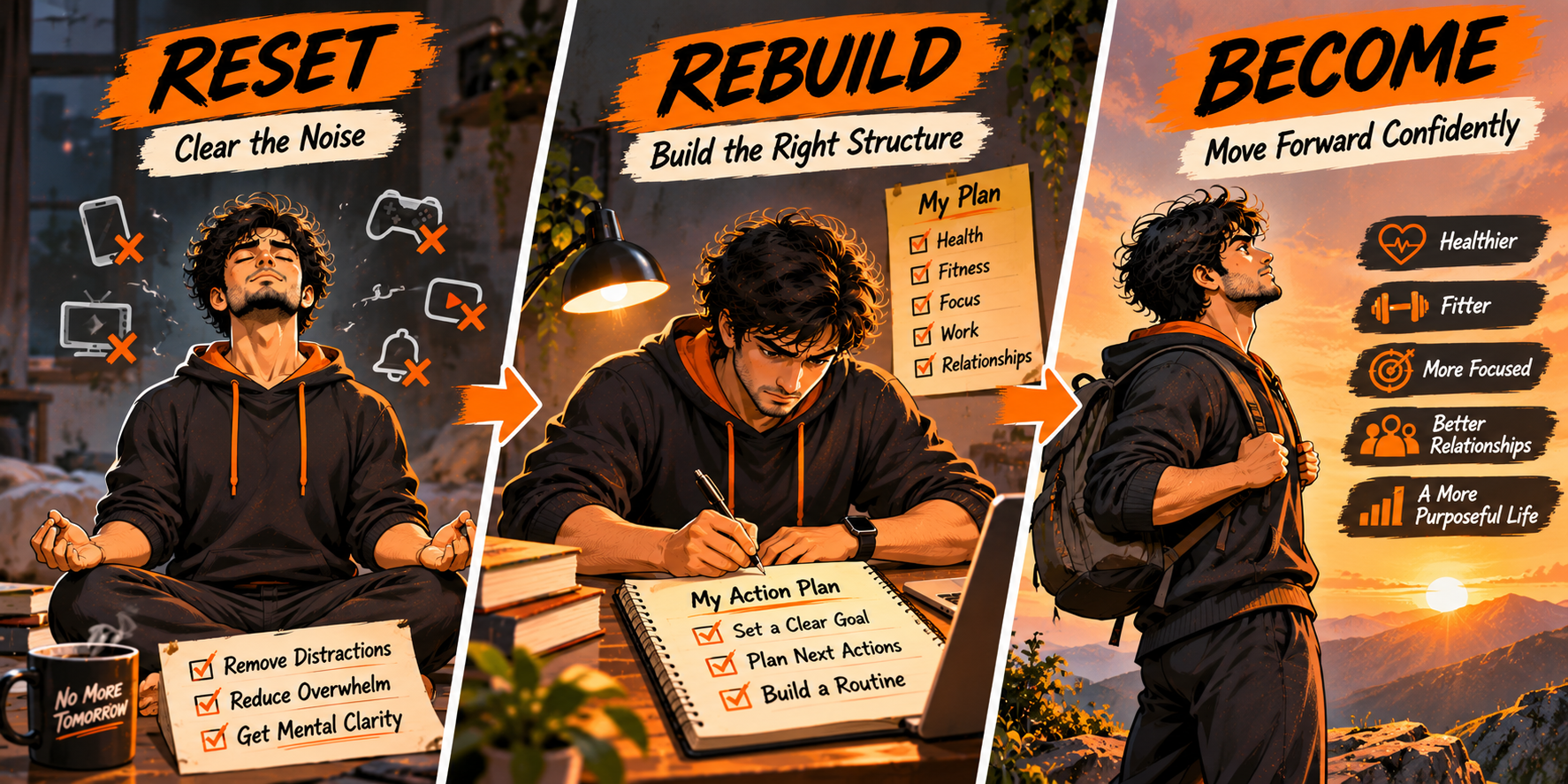
Meaningful improvement takes time.
You may notice small changes within a week, but building a sustainable lifestyle requires patience and repeated effort.
This is why thinking in terms of 90 days can be useful.
Instead of expecting an overnight transformation, divide your improvement journey into three phases:
Days 1–30: RESET
Understand your current lifestyle, identify priorities, remove unnecessary distractions, and establish basic routines.
Days 31–60: REBUILD
Strengthen your routines, improve consistency, and work steadily towards your chosen goals.
Days 61–90: BECOME
Continue improving, evaluate your progress, and turn useful changes into a sustainable part of your lifestyle.
These phases aren't rigid deadlines. They're a framework to help you focus on the right things at the right time.
7. Track Your Progress and Review Your Actions
One reason people lose momentum is that they don't notice their progress.
They focus on how far they still have to go instead of recognizing how far they've already come.
Keep track of the actions that matter.
At the end of each week, ask yourself:
- What did I actually accomplish?
- Which actions did I consistently follow?
- What prevented me from completing certain tasks?
- What should I change next week?
- What is my next priority?
Don't use tracking to punish yourself for missed days.
Use it to understand your behavior and make better decisions.
A simple progress record can help you see patterns that you might otherwise overlook.
8. Start With the Next Action, Not the Perfect Plan
It's easy to spend days researching routines, watching productivity videos, downloading planners, and designing the perfect schedule.
But planning can become another form of procrastination.
You don't need to understand every aspect of personal development before starting.
You need to take the next useful action.
If your sleep schedule is poor, start working on it tonight.
If you've been avoiding exercise, take a walk.
If an important task has been postponed for weeks, give it your attention today.
Don't wait until Monday, next month, or the beginning of a new year.
Your life improves through the actions you take, not the intentions you keep postponing.
Make Your Next 90 Days Count

A better life doesn't come from one dramatic decision. It comes from many small decisions repeated over time.
You don't have to change everything today. You just have to stop ignoring the things you know deserve attention.
If you want to take this process seriously, the No More Tomorrow 90-Day Life Reset Challenge gives you a structured way to work on your life.
It helps you organize your priorities, build manageable habits, track your actions, and review your progress across three phases: RESET, REBUILD, and BECOME.
Instead of keeping another list of things you wish you could improve, start working through them one action at a time.
You have the next 90 days. What will you do with them?
No More Tomorrow — Procrastinators postpone life. Doers live it.
Enjoyed this? Let others know.
Newsletter
Never miss a new post
New articles and product updates from No More Tomorrow, straight to your inbox. No spam.
By subscribing you agree to receive updates from No More Tomorrow. Unsubscribe anytime.
More in Personal Growth

Personal Growth
· NOMO
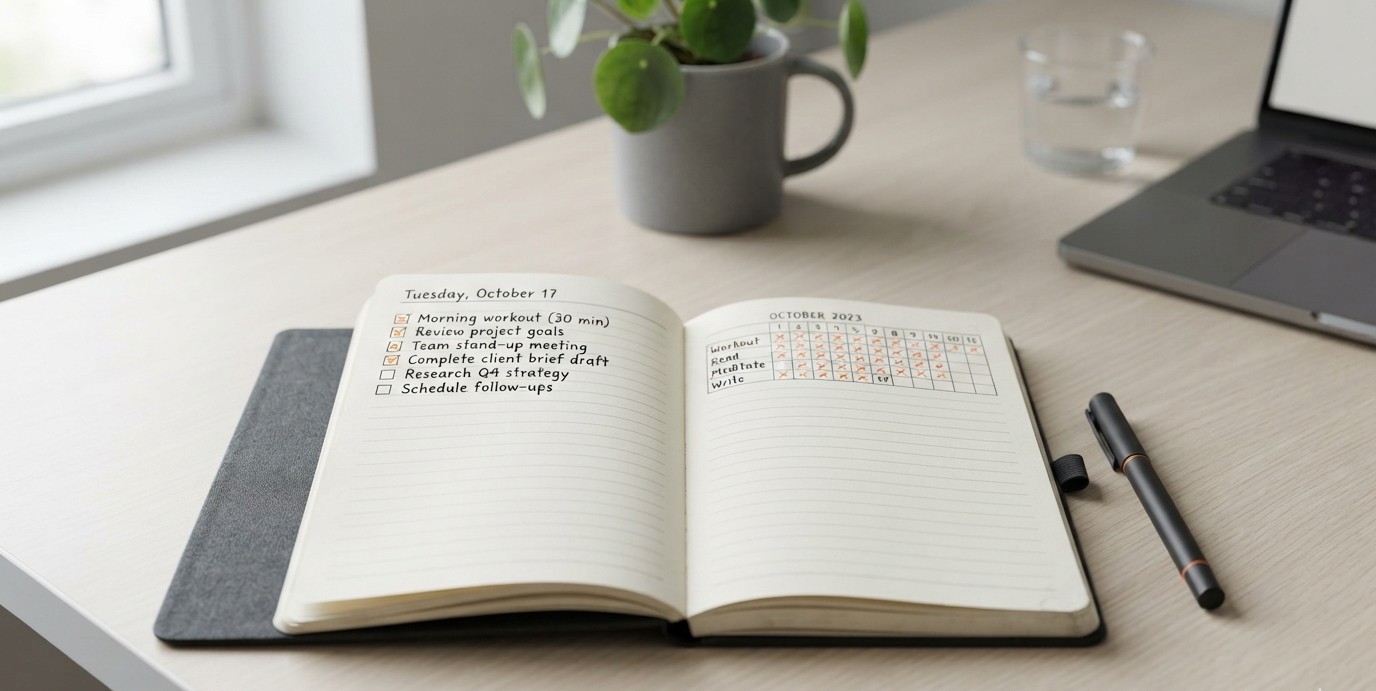
Why Seeing Your Progress Matters More Than You Think
Discover why tracking your progress matters, how small wins build confidence, and how visual progress tracking helps you stay consistent.
Consistency
· No More Tomorrow
How to Build Consistency in Your Daily Life (Even Without Motivation)
Consistency isn't about being perfect or feeling motivated every day. It's about building small habits, creating a simple system, and learning to get back on track when life gets in the way. Discover practical ways to build consistency and turn your goals into daily action.

Procastination
· No More Tomorrow
You're Not Avoiding the Task. You're Avoiding the Feeling.
Discover why you procrastinate, how fear and overwhelm make tasks harder to start, and simple ways to overcome procrastination and take action.